packaging operations case study
Building a Safer, Scalable Artwork Workflow
Creating clearer timelines, SOPs, process documentation and team education tools to make complex packaging artwork projects easier to understand, manage and complete.
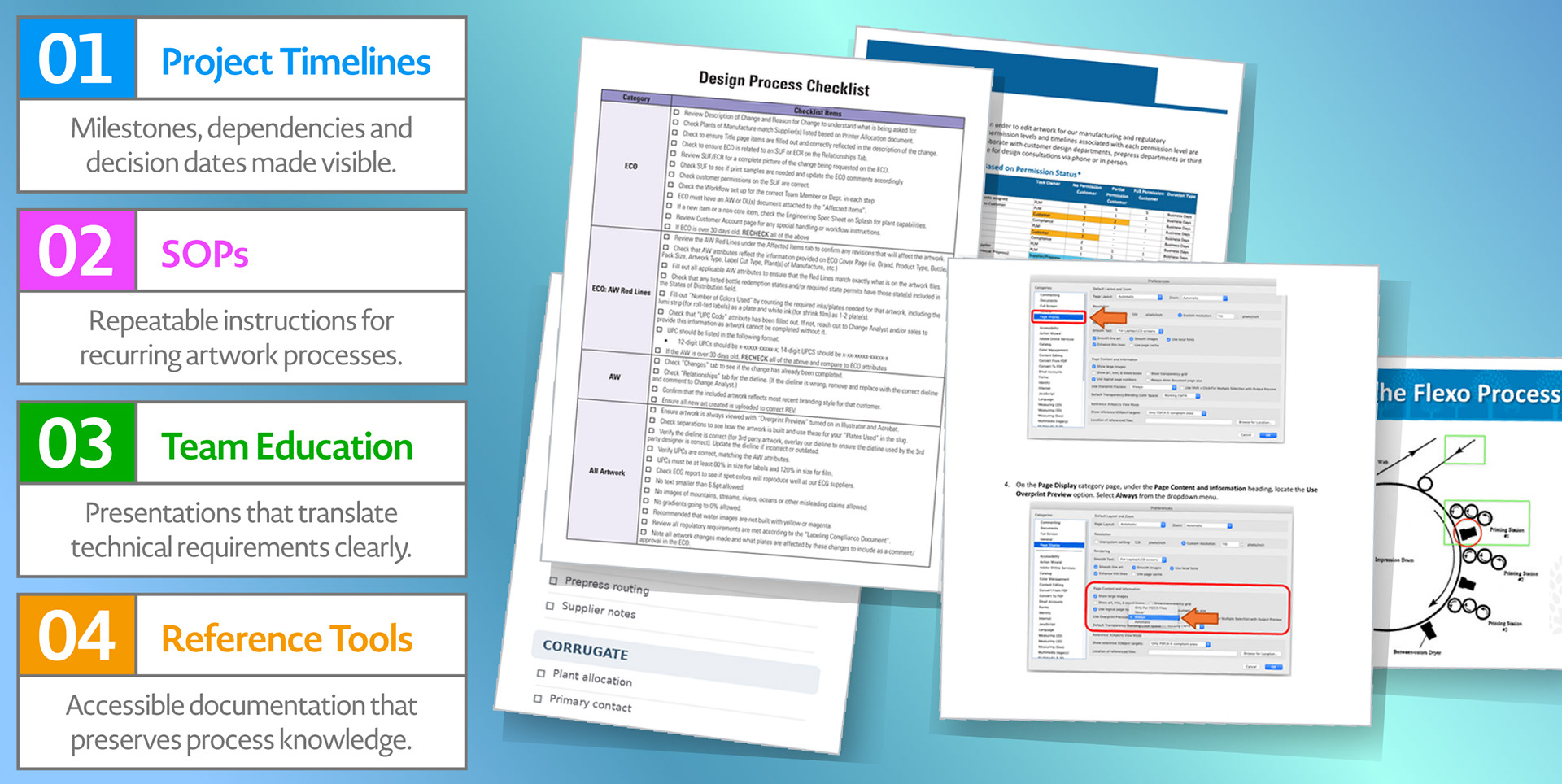
A coordinated toolkit for clearer planning, consistent execution and smoother project completion.
ROLE + TOOLS
• Packaging artwork operations + workflow leadership
• Stakeholder alignment, packaging production and risk management
• Tools: Microsoft Excel, Outlook, Word, PowerPoint and Teams; Adobe Illustrator and InDesign
DELIVERABLES
• Standardized project timelines and milestone frameworks
• SOPs, process guides and technical reference documents
• Team education presentations and onboarding tools

01 / OVERVIEW
Project Overview
As packaging artwork projects became more complex, I saw an opportunity to create clearer structure around how work was reviewed, prioritized and completed. Critical project information lived across emails, individual documents, chats and team knowledge, making consistent execution difficult and creating unnecessary dependence on experienced team members.
02 / PROCESS GAP
the Business Need
Packaging artwork moved through multiple stakeholders, technical requirements, approvals, suppliers and production milestones. As project volume and complexity grew, the process needed to become easier to navigate and less dependent on informal knowledge — without adding unnecessary administrative work for the team.
03 / EXISTING STATE
Where the process broke down
Recurring knowledge and project-planning gaps made it difficult to execute consistently across projects and team members.

Scattered Information
Process details were distributed across emails, files and individual team knowledge.
Inconsistent Timelines
Milestones and dependencies were not always communicated in the same way.
Knowledge Dependency
Recurring questions often required help from the same experienced team members.
Training Burden
New team members needed extensive one-on-one support to understand the full process.

04 / WORKFLOW STRATEGY
Turning knowledge into a repeatable system
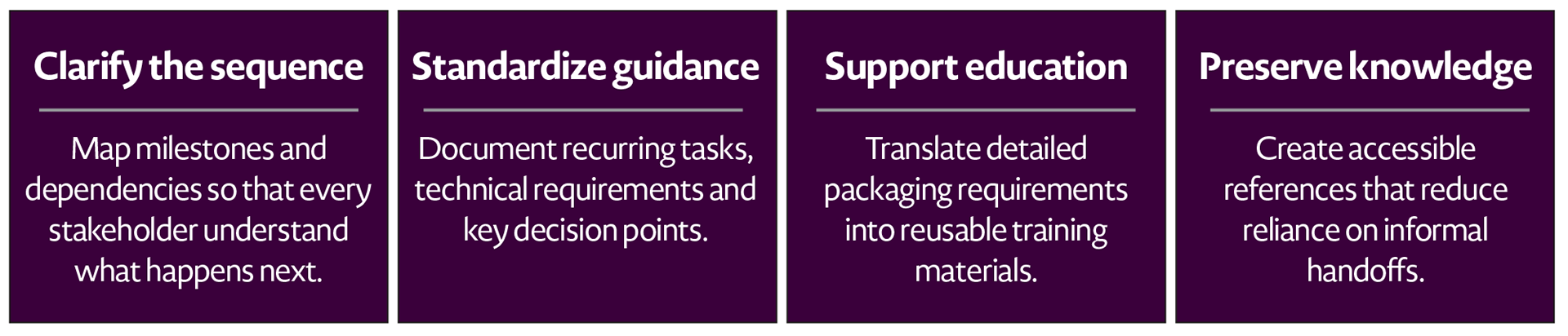
Rather than creating documentation for its own sake, each tool was designed to answer a recurring question, clarify a project stage or make technical information easier to apply. I organized the workflow around four priorities designed to make packaging projects easier to understand, execute and repeat.
05 / Project timelines
Making the process visible
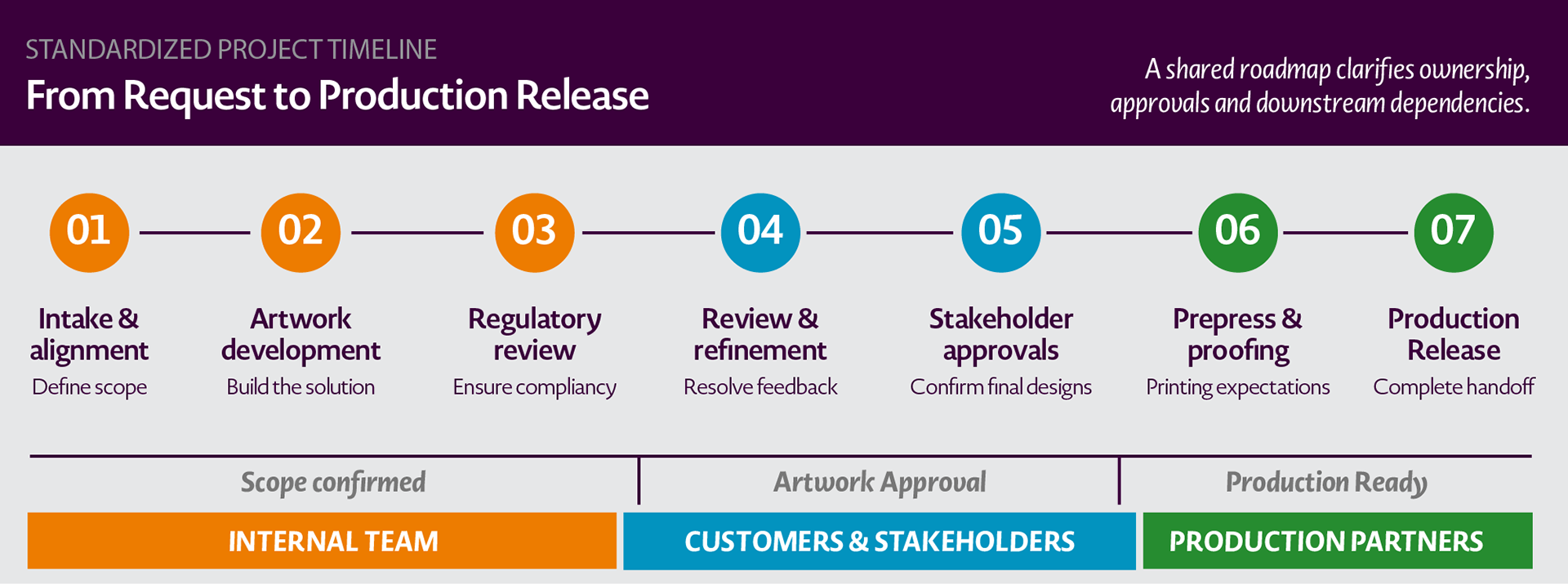
Working in partnership with cross-functional teams, I helped create standardized timelines that mapped key milestones, dependencies and approval stages throughout the artwork-production process. These timelines gave stakeholders a clearer understanding of what was required, when decisions needed to be made and how delays could affect downstream production timing.
• Major milestones shown in one consistent sequence
• Decision dates separated from final production deadlines
• Dependencies made visible before they affected timing
06 / SOPs + documentation
Preserving process knowledge
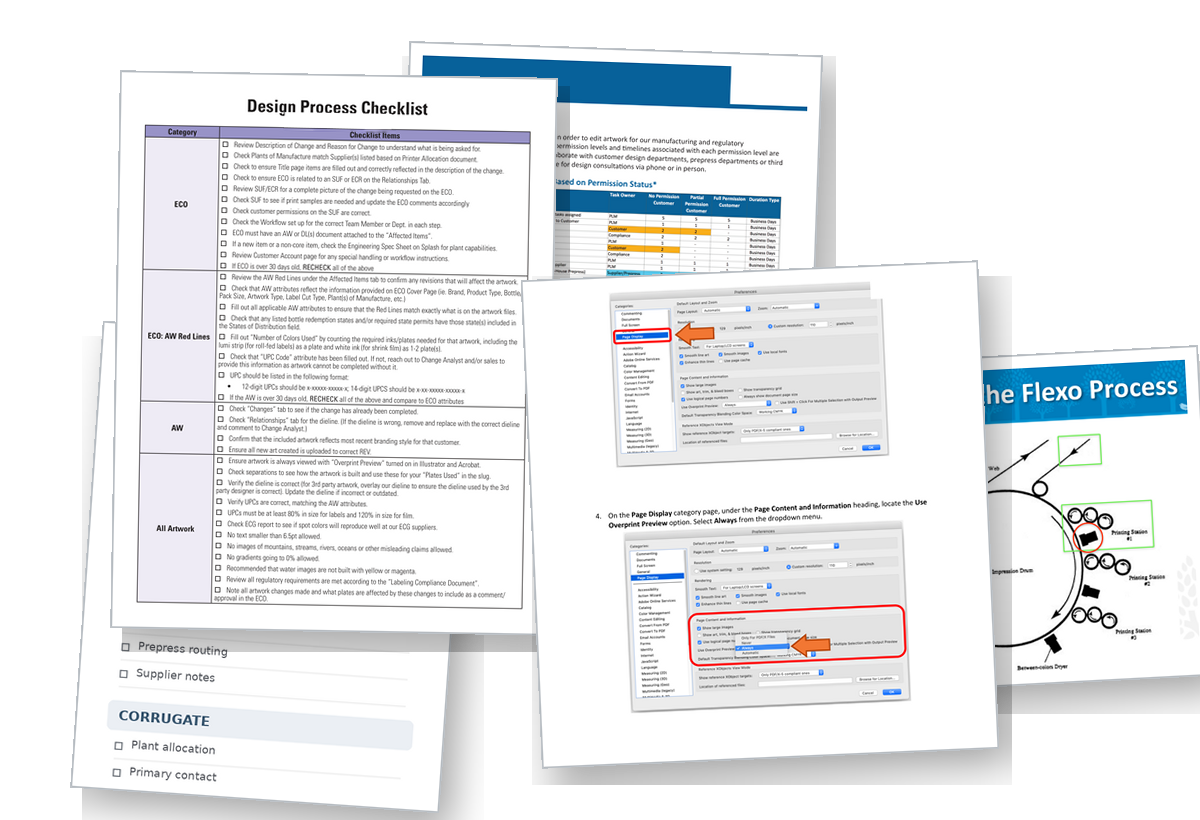
I developed SOPs, reference guides and process documentation for recurring artwork tasks and technical requirements. The documentation created a shared reference point for the team and reduced reliance on information being passed informally from person to person.
• Step-by-step guidance for recurring artwork processes
• Technical checklists and production references
• Consistent documentation for onboarding and daily use
07 / Team education
Making information easier to use
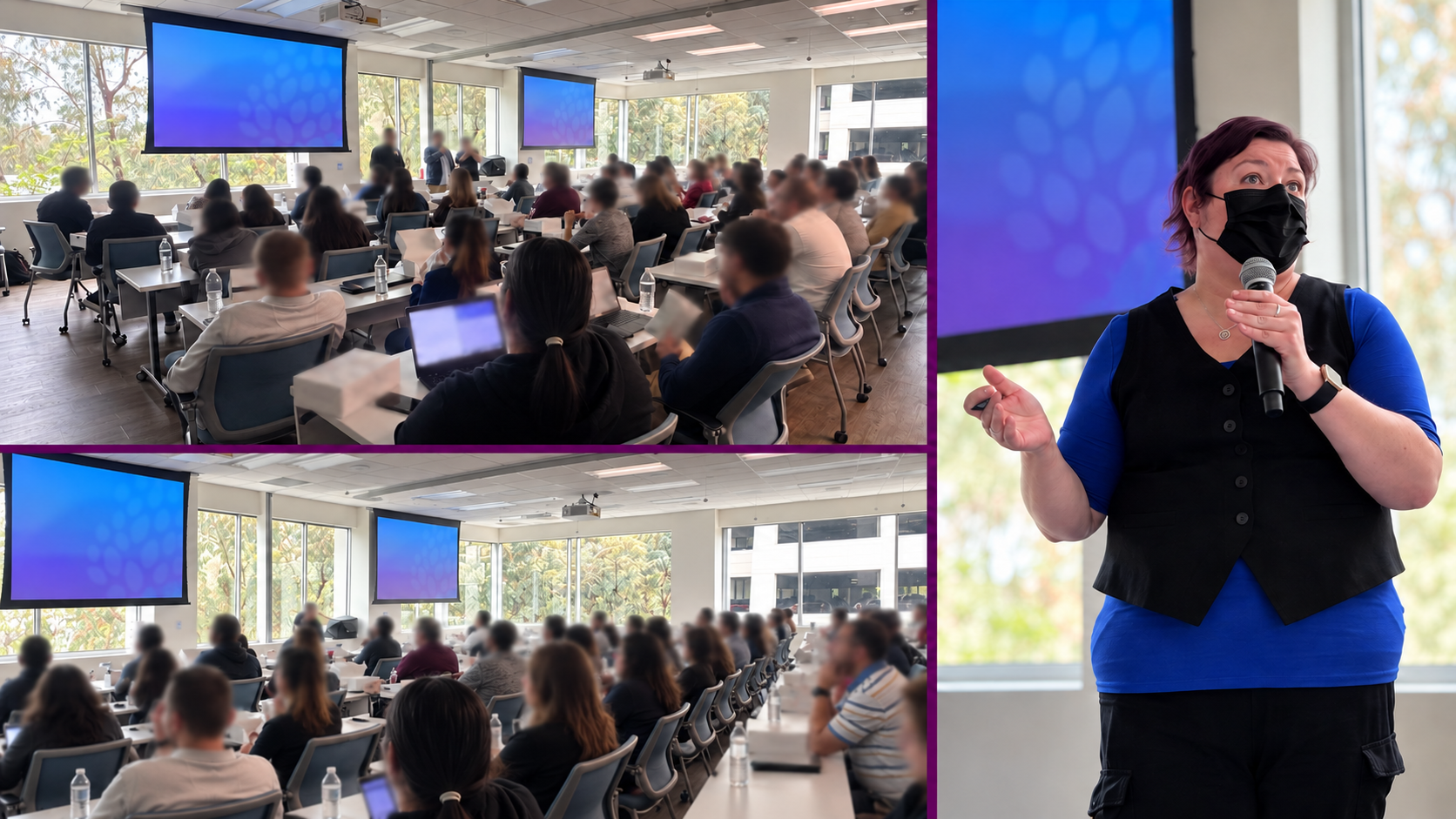
Documentation was supported by presentations and training materials that translated detailed packaging requirements into information team members could understand and apply. These resources supported onboarding, process education and more consistent practices across the team.
• Visual explanations of complex packaging processes
• Reusable onboarding and refresher materials
• Shared language for discussing technical requirements
08 / OUTCOME
A SYSTEM THAT COULD SUPPORT GROWTH
The workflow tools and documentation created a stronger operational foundation as project demand continued to grow.
Clearer Planning
Milestones, dependencies and project expectations became easier to understand.
Easier Onboarding
New team members had reusable resources instead of relying only on one-on-one guidance.
Consistent Completion
Recurring processes and technical requirements were documented in a repeatable way.

Supporting Evidence
32% year-over-year increase in artwork workload supported in 2025
0 additional headcount required to support the increase
No routine weekend overtime required